
Month-end shouldn’t feel like a second job
You know how the day went without opening a report. Busy felt busy. Slow felt slow. Cash in the drawer roughly matched what you expected.
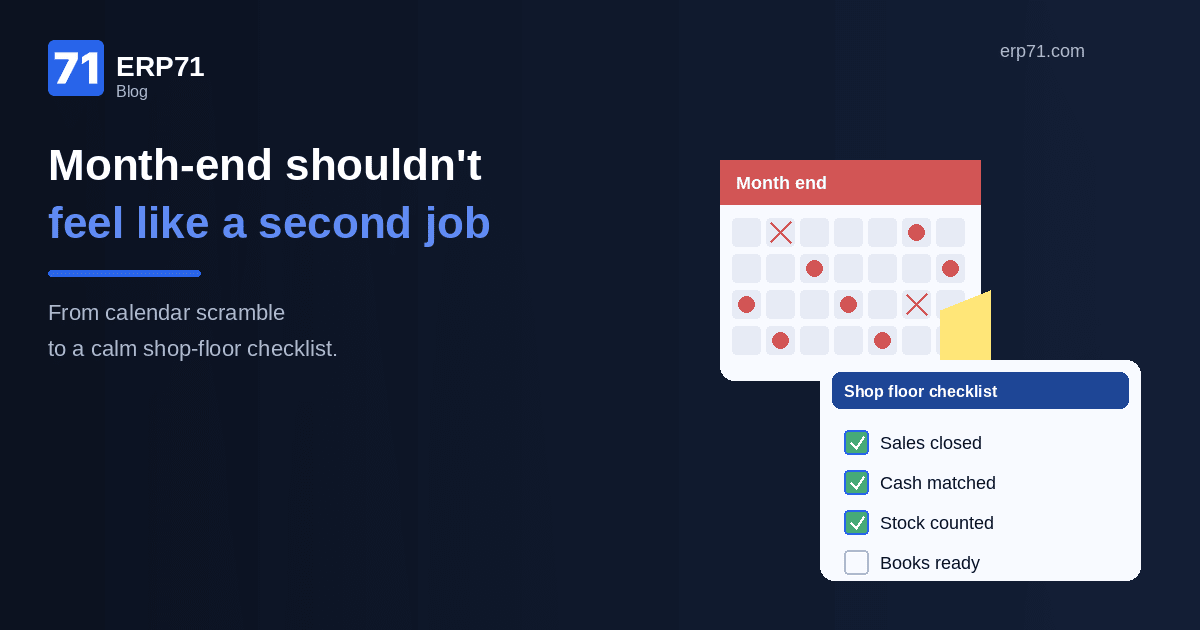
You know how the day went without opening a report. Busy felt busy. Slow felt slow. Cash in the drawer roughly matched what you expected.
Then the month ends.
Suddenly you are hunting unpaid supplier slips in WhatsApp, asking who took cash for “home expenses,” matching bKash and Nagad to sales that were never tagged, and realizing nobody counted the back room. Tax talk shows up like a surprise guest. The shop ran. The close did not.
That is the gap. Daily feel is not the same as a month you can trust.
Why month-end becomes a second job
One-shop owners rarely fail because they cannot sell. They fail the close because the month was never collected in one place while it was happening.
Typical scramble:
- Supplier dues living in chats, not in a list
- Owner draws mixed with till cash and never marked
- Digital wallets looking fine while the books disagree (bKash/Nagad reconciliation once that post is live)
- Stock “known by eye” until a customer asks for something empty
- A spreadsheet that worked in week one and lies by week four (spreadsheets)
None of this needs a full finance department to start fixing. It needs a close you will actually finish.
If you cannot answer those without a weekend dig, the month is open even if the calendar moved on.
Stock mistakes make the same wallet feel wrong — we wrote about stockouts and overstock here. A clean close catches that early instead of discovering it when rent is due.
Four habits for a close under about two hours
You do not need perfection. You need a repeatable shop-floor close.
1. Pick a close day and protect it.
Same day every month — for many shops, the 1st morning or the last evening before the new month starts selling hard. Put it on the calendar like a supplier meeting. If you “do it when free,” it never becomes free.
2. Use one page, not three WhatsApp groups.
One checklist in this order: (a) cash count, (b) bKash/Nagad/card totals vs sales, (c) rough payables and receivables, (d) owner draws listed, (e) quick stock sanity on top movers. If it is not on the page, it wai
Two hours is enough when the month was loosely tracked. If every close takes a full Sunday, the problem is daily habits, not the calendar date.
Discipline first — then tools that keep the month in one place
A notebook close beats no close. A close that depends on hunting chats will break as soon as you add a second counter or a festival week.
When month-end lives in screenshots and memory, tools like ERP71 help keep that month’s sales, stock, and money in one place — without pretending you need a full finance department tomorrow.
Start with this month’s one-page close on your chosen day. Finish it even if the numbers are ugly. Ugly and finished beats pretty and unfinished.ts until next month’s open items — do not invent a second hunt mid-close.
3. Lock last month before you tell next month’s story.
Once you close, do not keep editing last month’s sales to make this week look better. New sales belong to the new month. Soft numbers teach the team that the close is optional.
4. Match money the same day you close — not “later from SMS.”
Cash + wallets should equal sales minus known draws/fees/refunds, within a tolerance you write down. Investigate the same sitting. Memory dies overnight; screenshots multiply.
What “closing the books” means for one shop
Forget the CA firm checklist for a moment.
For a single shop, a useful month-end answers five plain questions:
- How much did we sell (cash + digital)?
- How much cash and wallet money do we actually have?
- What do we still owe suppliers?
- What are customers still owing us (if you sell on credit)?
- Does stock still look sane for the money we think we made?