
Not every busy shop needs a second branch
A packed counter feels like proof you should rent another shop. Often it only proves the first shop is overloaded. Before you sign rent #2, check boring readiness signals — and watch for pride and copycat pressure dressed up as growth.
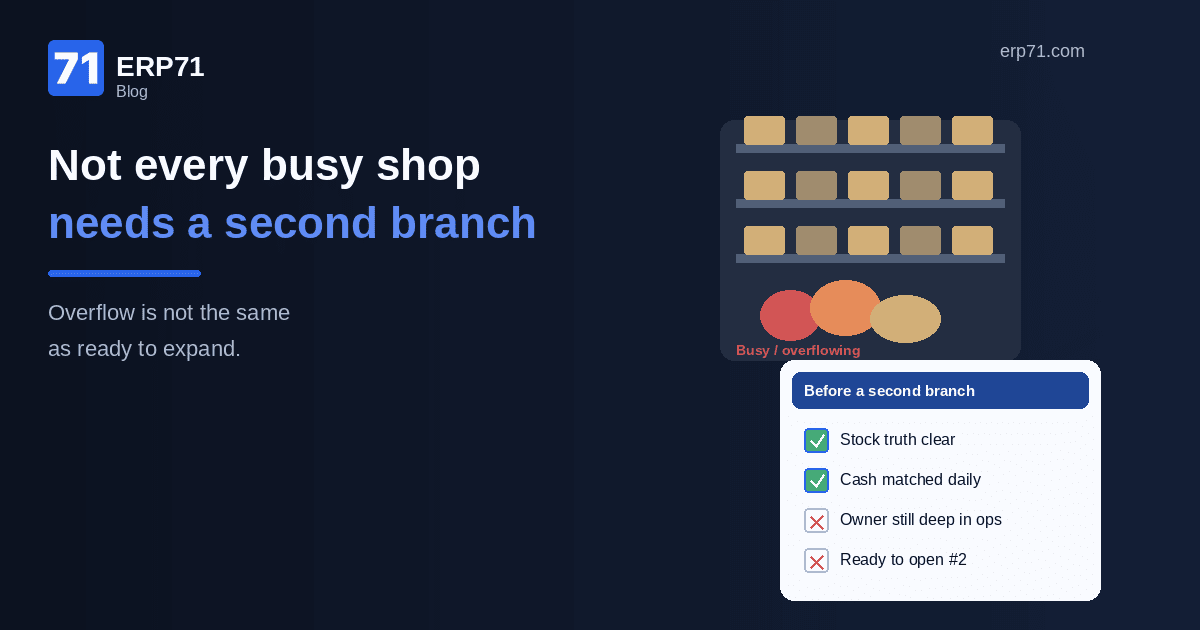
The counter is packed. WhatsApp keeps pinging. A cousin says the road two blocks down is “empty for your kind of shop.” A competitor just opened a second door and posted the ribbon cutting.
It feels obvious: busy means grow. Grow means another rent.
Often it only means the first shop is full of demand and thin on control. A second branch does not fix that. It copies the mess into a new address while you pay twice for rent, staff, and stock sitting still.
Busy is not the same as ready
Busy is customers waiting. Ready is the shop still working when you are not standing there.
Owners mix them up because pride is loud and readiness is boring. Pride says you are winning. Readiness asks whether cash, stock, and people survive a normal week without you as the glue.
If month-end is still a weekend dig through chats and screenshots (simple month-end close), or sales still live in a sheet that drifts by week four (spreadsheets), a second key usually makes both problems louder.
Four signals you might actually be ready
You do not need a corporate HQ. You need a few plain proofs.
1. The first shop can run a week without you on the floor.
Not a holiday where everything pauses. A normal week: opening, selling, closing, petty decisions. If every “where is this SKU? call still needs you, branch two will call twice as often.
2. Stock, cash, and wallets reconcile without archaeology.
You can match till + bKash/Nagad to sales, and stock still makes sense for the money you think you made. If stockouts and overstock already squeeze cash (here), splitting inventory across two rooms without that habit is how both shops feel rich on shelves and poor in the drawer.
3. Someone else can close a day the way you close a day.
Same cash count. Same digital totals. Same note on draws and dues. If only you can close, you do not have a second branch manager. You have a second place that waits for you after dark.
4. Demand repeats — and you can name the float.
Not one festival spike. Repeated weeks. And you can write the next three months of rent + payroll + stock float for the new shop before it pays for itself. If that number scares you only when said out loud, it should.
Three red flags that feel like growth
Pride pressure. “Leaders expand.” Expanding a leaky bucket is not leadership. It is a bigger puddle.
Copycat pressure. Rival opened #2, so you must. Their ribbon does not pay your rent. Their staff mistakes will not show on your feed.
Packed-counter blindness. Overflow at 7pm can mean wrong hours, weak helpers, or dead stock eating space — not a mandate for another lease. Fix the floor you have before you rent another floor.
A useful test: would you open branch two if nobody you know ever saw the signboard? If the answer flips to no, you were buying status, not capacity.
What to do instead of rushing the lease
Tighten the first shop for one more quarter. Put a trusted closer on the evening shift. Make one-page month-end non-negotiable. Clear sleepers so cash and shelf space free up. Only then price the second rent against a written float.
When you are honestly deciding whether the next shop is growth or a bigger headache, tools like ERP71 help you see sales, stock, and money in one place — and later across locations — without pretending you need a head office tomorrow.
Busy is a compliment. A second lease is a commitment. Treat them as different decisions.