
Cash in the drawer is not money in the bank
The till looks fat with notes. Your phone shows a few bKash pings. You feel covered. Then the supplier calls for dues, the bank balance says no, and restock money was never in that pile. Drawer cash, mobile money, and the bank are three piles. Treating them as one is how a full till still leaves you short.
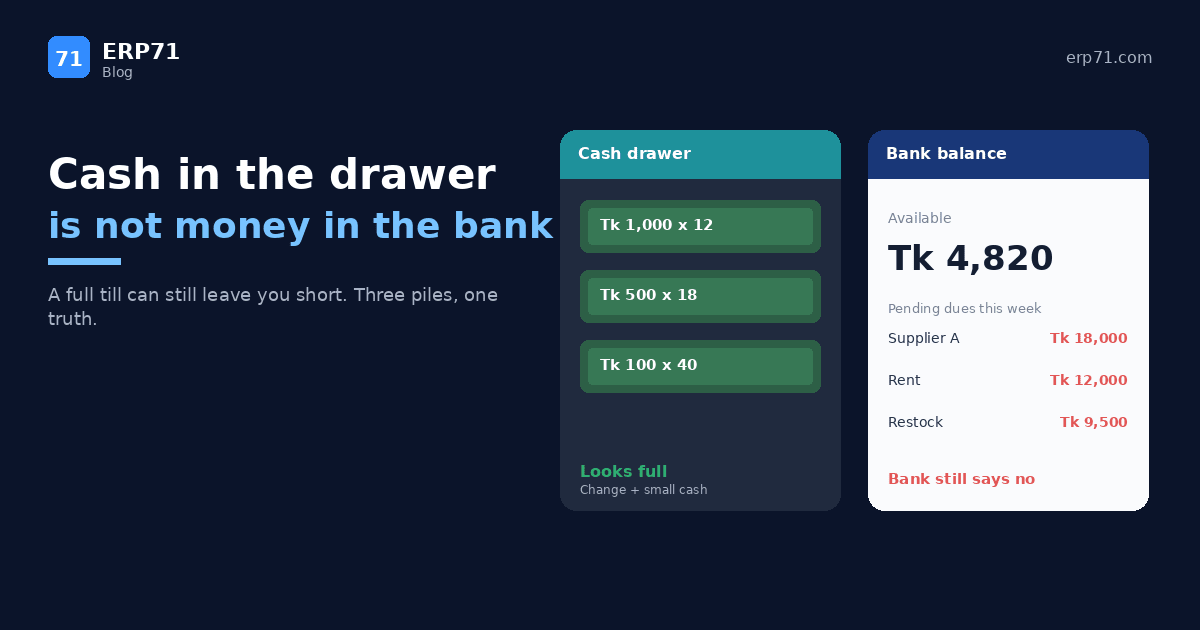
You open the drawer at closing. Notes look plenty. A few customers paid on bKash. Somebody owes you on credit. You go home thinking the shop is fine.
Morning comes. Rent is due. A supplier wants settlement. You check the bank and the number is thinner than the till felt. The notes in the drawer were change, not free cash. The mobile pings were not all cleared. The “we have money” feeling was three piles mixed into one story.
This is the same soft money trail that already hurts when wallets and till do not match (bKash / Nagad), and when month-end is dug out of memory (simple month-end close). A full drawer is not the same as cash that can leave the business.
Three piles, one wrong story
Owners often run one mental total: till + phone + bank = “we are okay.”
That total lies in three places at once.
Drawer cash is for change and small outflows. It is not a reserve for big supplier bills. Mobile money can look real on the screen and still be pending, disputed, or already promised to restock. Bank balance is what you can actually send without emptying the counter.
When sales still float in a sheet (spreadsheets), the cash side usually floats too. Nobody writes which pile paid which bill. Festival week makes it louder: more notes in the till, more wallet pings, more “pay him from the dr1. Close the drawer against sales and receipts, not against “looks full.”
Count the notes. Match them to cash sales and small cash outs for the day. A fat drawer after a credit-heavy day is not profit. It is often change waiting to leave.
2. Separate “safe to spend” from till change.
Safe to spend is bank balance plus mobile money you have already cleared and trusted. Till notes stay for change and tiny shop needs. Mixing them is how a big payment empties the counter before lunch.
3. Write one short daily note.
Drawer count. A glance at the bank. Known dues due this week. Three lines on paper or phone is enough. Same idea as a short purchase trail (purchase orders): one record you can open when the supplier calls.
If you are already weighing a second branch (second branch), messy cash piles at shop one will simply copy into shop two, with twice the surprise bills.
Soft close
When sales, mobile money, and bank land in one ledger, “drawer full” starts to mean something you can trust. Tools like ERP71 are built for that kind of one-shop clarity: sales, wallets, and bank in the same story, without hiring a full-time cashier accountant.
Keep notes in the till for change. Keep the truth in one place.
4. Never pay a big supplier bill from drawer feel alone.
Open the bank first. Check cleared mobile. Then decide. If the till looks rich and the bank looks thin, believe the bank. The drawer is not your settlement account.
What this is not
It is not telling a tiny shop to stop taking cash. It is not asking you to freeze every note in a vault. It is refusing to let “the till looks full” replace “we can pay this without breaking tomorrow.”
awer” until the bank refuses.
Stock pain and cash pain connect. Wrong buys lock cash on the shelf (stockouts and overstock). Paying those buys from drawer feel alone locks you a second time.
Four habits that keep the piles honest
You do not need a full-time cashier accountant. You need a daily truth that does not confuse change with spendable money.