
The WhatsApp order is not a purchase order
You bought on a call, a voice note, or a WhatsApp line. The supplier remembers one qty. You remember another. Returns get ugly, the shelf never matches the bill, and month-end turns into archaeology. A short written order is not corporate theatre. It is how cash stops disappearing into “I thought you said.”
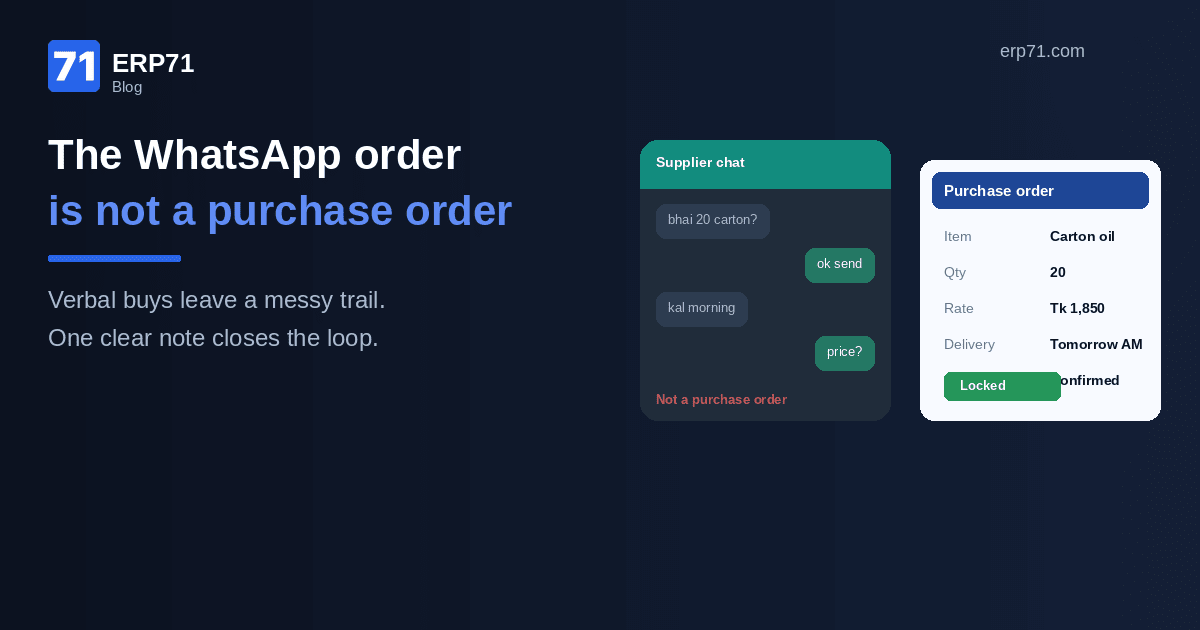
The supplier calls. You say yes for a few cartons. Someone types a line in WhatsApp. Or nobody writes anything, and both of you trust memory.
Two weeks later the van arrives with more than you wanted, or less, or a different brand. The bill looks wrong. The return argument starts. Your shelf count and your supplier ledger stop agreeing — the same mess that already kills cash when stockouts and overstock pile up (here).
Owners often shrug: “Paperwork is for factories.” The real cost is not a form. It is money stuck in the wrong stock, fights that eat an afternoon, and a month-end dug out of chat history (simple month-end close).
Memory is a bad purchasing system
A verbal yes feels fast. It also erases the agreement the moment the call ends.
Qty, pack size, agreed price, and “who pays the short if one carton is damaged” live in two heads. Staff who were not on the call cannot help. When sales still float in a sheet (spreadsheets), the buy side is usually just as soft: no single place that says what you ordered versus what you received.
Festival week makes it louder. More vans. More voice notes. More “you ordered that” with nothing to open and check.
Four habits that work for one shop
You do not need a purchasing department. You need a trail you can read when the van is at the door.
1. One short order note per supplier buy.
Date, supplier name, items, qty, pack size, and the price you agreed — even if it starts as a phone note or a pinned WhatsApp message you both confirm. Call it a PO if that word helps. Call it an order slip if it does not. The point is one record before the goods move.
2. Check received qty against that note before you pay the balance.
Open the note at the door. Count what landed. Mark shortages and extras on the same record. Paying the full bill first and arguing later is how wrong stock becomes locked cash.
3. Keep returns and shortages on the same trail.
A return that lives only in a voice note is a future fight. Same note, same date, same person who signed for the van. When wallets and till already need careful matching (bKash / Nagad), supplier dues deserve the same discipline.
4. Reconcile supplier dues weekly against the notes, not memory.
Once a week, line up what you ordered, what you received, what you returned, and what you still owe. Fifteen quiet minutes beats a loud month-end dig.
What this is not
It is not a factory ERP ritual. It is not asking a tiny shop to hire a purchasing clerk. It is refusing to let “we talked” replace “we agreed.”
If you are already deciding whether a second branch is growth or a bigger headache (second branch), messy buys at shop one will simply copy into shop two.
Soft close
When purchase, stock, and supplier dues live in one place, a WhatsApp yes can become a real trail without pretending you need a head office. Tools like ERP71 are built for that kind of one-shop clarity — order, receive, stock, and dues in the same story.
Buy on trust if you want. Close the books on a written order.