
Festival week prep: stock, cash and supplier dues in one plan
Before a big festival week, sales jump, the drawer fills fast, suppliers want their money, and staff are stretched thin. Then the week ends with dead stock on the shelf and dues nobody wrote down. One simple plan made two or three weeks ahead fixes most of it: what to stock, how much cash to keep aside, which dues to clear first, a nightly count, and one check after.
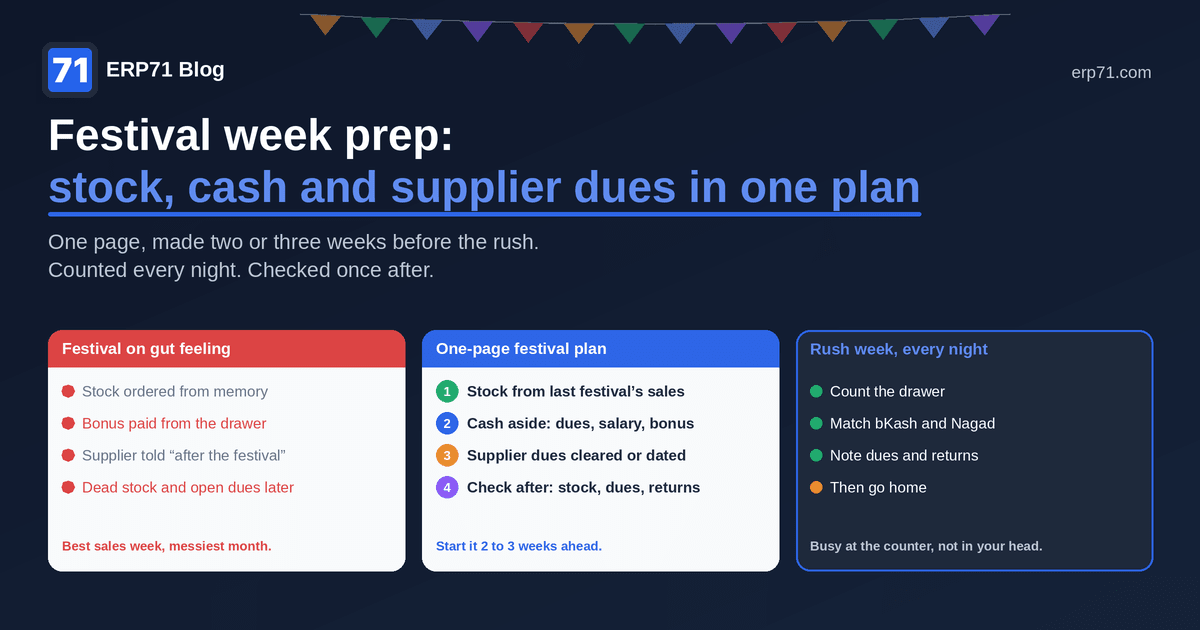
Every shopkeeper knows the feeling. Two or three weeks before Eid, Puja, Pohela Boishakh or the wedding rush, the phone starts ringing. Customers ask if the new stock has come. Suppliers ask when you will clear last month. Staff ask about the bonus.
Then the week itself arrives and nobody has time to think. The drawer is full by noon. bKash alerts keep coming. You buy a little more of whatever ran out yesterday, pay one supplier from the drawer, promise another “after the festival,” and go home too tired to count.
The week after is when the bill comes. Cartons of the wrong size sit in the back. A supplier says you owe more than you remember. The cash you thought you made is gone, and you cannot say where.
None of this is bad luck. It is the busiest week of the year run without a plan. One page, made two or three weeks ahead, fixes most of it.
Why festival week breaks the normal routine
On a normal week, small mistakes get fixed the next morning. In festival week there is no quiet next morning. Every day is the rush.
Stock gets ordered on gut. The item that sold out last time gets ordered three times over, and the item nobody remembers runs out on day two (stockouts and overstock). Drawer cash and wallet money mix together, so the counter looks rich while the bank looks empty (cash in drawer vs bank). Supplier promises are made on the phone with nothing written behind them (purchase orders). Regular customers take goods on due “until after the festival” (due sales).
Each one is small. Together they turn the best sales week of the year into the most confusing month-end (simple month-end close).
Four habits for one festival plan
You do not need a big budget sheet. You need one page with four parts, started two to three weeks ahead and kept on the counter all week.
1. Stock up from last festival’s real sales, not from memory.
Pull your sales from the same festival last time, or check old supplier bills. List your top 20 items and how many actually sold. That is your base. Add a little for growth. Cut anything that sat as leftovers last time. For new or risky items, order a smaller first lot and agree a quick top-up with the supplier. Write the plan as purchase orders, not phone calls, so you know what is coming and at what price.
2. Put the cash aside before the rush, not after.
Write three numbers at the top of the page: supplier payments due during the festival weeks, staff salary plus festival bonus, and a small buffer for surprises. Keep that money in the bank or a separate envelope, not in the drawer. The drawer will look full all week. That is sales money, not spare money. When you know salary and bonus are already safe, you do not panic and borrow on day four.
3. Clear or settle supplier dues before the rush starts.
List every supplier you owe, with the amount and the date they expect it. Pay the small ones in full. For the big ones, call early, agree a date and an amount, and write it down. A supplier who hears from you two weeks early will usually give you time. A supplier who hears nothing until they walk in on your busiest evening will not. Clear old dues first, so new stock does not sit on top of an unpaid bill.
4. Count every night during the rush, then do one check after the festival.
Close every day the same way: count the drawer, match bKash and Nagad, note the day’s due sales and returns (bKash / Nagad reconciliation). Ten minutes a night beats one lost week later. Then, within a week after the festival, do one check: leftover stock by item, open supplier dues, customer dues still out, and returns or damaged goods to send back (returns and damage). Write down what you will order differently next time. That note becomes the first line of the next festival’s plan.
What this is not
It is not a forecast model. It is not guessing how many customers will walk in. It is walking into the busiest week with your stock, cash and promises already on paper.
It also does not need to be perfect the first time. Your first plan will be rough. The second one starts from the first. By the third festival, the page almost fills itself.
Soft close
When last festival’s sales, supplier dues and daily counts already sit in one place, the festival plan is a short page you fill in, not a weekend of digging through old bills. Tools like ERP71 are built for that kind of one-shop clarity: what sold last time, what you still owe, and what came back after.
Start the page this week. Fill the four parts. Let the festival be busy at the counter, not in your head.
See it on your own shop's data. Book a free 15-min demo on WhatsApp: https://app.erp71.com/s/eavz8v