
Returns and damaged stock without a fight
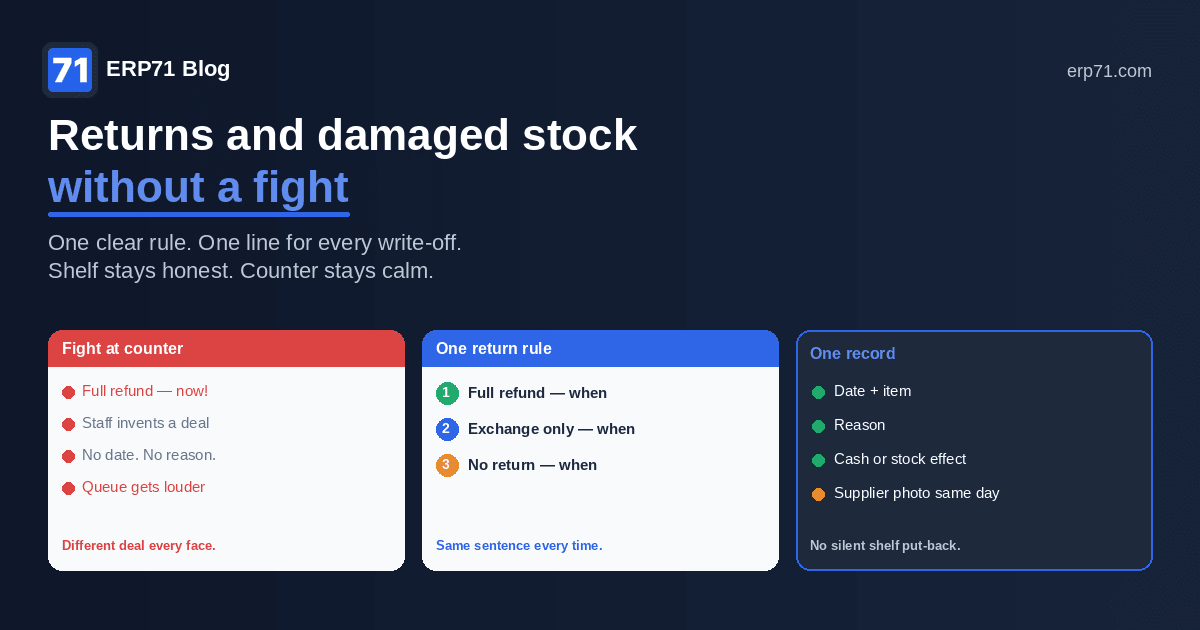
BD shops take returns and damage all week. Without one clear rule, every return becomes a counter fight: customers want full refunds, owners feel cheated, staff invent one-off deals. Damaged supplier cartons get shelved or dumped with no note. Cash, stock and supplier dues drift apart. The real question: what left, what came back, and who owes whom.
A carton comes back open. A regular wants cash for yesterday’s pack. Staff look at you. You invent an answer so the queue keeps moving.
That is how returns and damage quietly break a shop. Not because customers are rude. Because every case gets a different deal, and nothing lands in a book you will open again.
Kindness at the counter is fine. Guesswork is not. When returns and write-offs have no rule and no line, the shelf count lies, the drawer lies, and the next supplier call starts with an argument you cannot win.
Why a “small return” can cost a whole week
A returned pack leaves the customer’s hands and often sits on a side shelf with no date and no reason. Damaged stock from a van gets dumped or sold anyway. Either way the system still thinks those units are sellable, or that cash is still in the till.
That fog stacks with every other blurry number. Soft wallet trails confuse settlement (bKash / Nagad). Due sales feel like sold cash until they fail (due sales). Wrong buys lock money on the shelf (stockouts and overstock). A silent return makes stockouts look worse and overstock look better than they are.
Month-end then becomes archaeology (simple month-end close). You cannot say what left, what came back, and who owes the difference. That is the same one-shop problem as blurry “accounting” answers (what real accounting means): the counter was busy, the notebook was not honest.
Four habits that keep returns calm
You do not need a warehouse policy. You need a rule the whole counter can say out loud.
1. Write one return rule and say it the same way every time.
When is full refund, when is exchange only, when is no return. Staff should not invent a new deal for each face. Regulars respect a clear line more than a soft “just this once.”
2. Every return or damage write-off gets a line: date, item, reason, and cash or stock effect.
A silent shelf put-back is how counts drift. If the money left the drawer, say so. If the unit is unsellable, mark it write-off, not “still in stock.” Floating sheets and head notes will not survive a busy week (spreadsheets).
3. Supplier damage: photograph and log the same day, before the next purchase order.
Do not wait until the van is gone and the carton is mixed into the shelf. A same-day photo and a short note beat a week-later argument. Place the next order with that note in hand (purchase orders).
4. Keep returns and damage separate from ordinary sales and due sales.
Daily close should show them as their own lines, not hidden inside “sold a lot.” Cash in drawer vs bank stays clearer when returns are not pretending to be sales (cash in drawer vs bank). Month-end and stock counts stay honest when write-offs are visible.
Festival week makes every soft rule louder. More cartons, more voice notes, more “take it back.” The shops that stay calm already have one sentence for returns and one line for every write-off.
What this is not
It is not banning returns for every regular. It is not turning a neighbourhood shop into a cold warehouse. It is refusing to let each return invent a new deal, and refusing to treat damaged stock as invisible.
If you are already weighing a second branch (second branch), fuzzy return habits at shop one simply copy into shop two, with twice the fights and the same lying shelf count.
Soft close
When returns and damage sit next to sales and stock in one place, the counter stays calm: one rule, one record, fewer fights. Tools like ERP71 are built for that kind of one-shop clarity: what left, what came back, and who owes whom, before the next van or the next angry queue.
A clear rule is kinder than a long argument. Write the return. Log the damage. Keep the shelf honest.