
Due sales that never come back
Many shops treat “due” sales as almost-sold. The counter feels busy, the notebook looks full, yet suppliers still need cash this week. Credit to regulars is normal. The trap is when those dues have no name, no date, and no follow-up. A few big unpaid tickets quietly eat the cash that should restock the shelf or pay the next purchase order. Profit on paper. Empty drawer in real life.
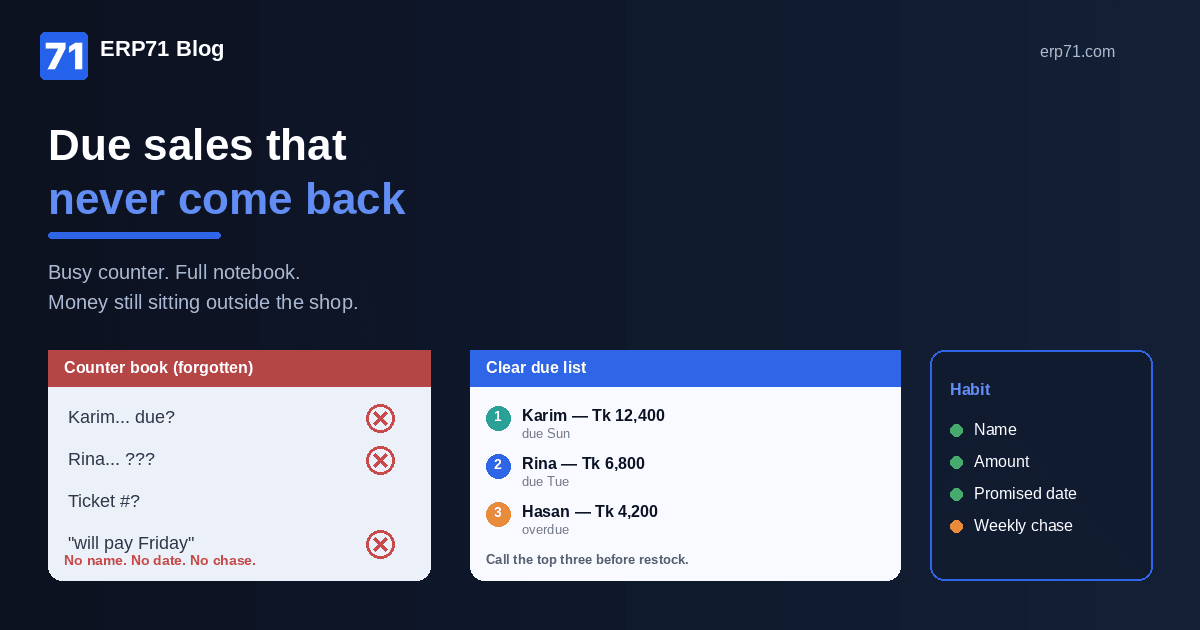
You close a busy day and the counter book is thick with ticks. Regulars took goods on due. You feel the shop worked. Then the supplier van shows up, and the drawer cannot pay for the next load.
That is the quiet trap of customer credit. Due sales feel like sales. They are not cash until someone pays. When the due page has no names, no promised dates, and no chasing, the money sits outside the shop while you still think you “sold a lot.
Credit itself is not the enemy. In Bangladesh, shops run on trust with regulars. The enemy is due without a notebook that you actually open again.
Why “busy” and “broke” can sit in the same week
A due sale leaves the shelf. It does not fill the till. If you mix due totals with cash, bKash, and bank in one mental pile, “we sold a lot” hides money that never came back (cash in drawer vs bank). Soft wallet trails already confuse settlement (bKash / Nagad). Due sales make that fog thicker.
Meanwhile stock still needs replacing. Wrong buys lock cash on the shelf (stockouts and overstock). Purchase promises without a clear list make the next order guesswork (purchase orders). A few large unpaid tickets can wipe the cash that should have covered both restock and supplier dues.
On paper the week looks fine. In the drawer it does not. That gap is the same one-shop problem as blurry “accounting” answers (what real accounting means): you cannot say tonight who owes what, and when they promised to pay.
Four habits that keep due sales from disappearing
You do not need a collections department. You need a rhythm a busy owner can keep.
1. Write every due sale with a name, an amount, and a promised date.
A tick in the counter book is not enough. “Karim, 4,500, Friday” beats “due” with a vague checkmark. If the sale lives only in someone’s head or a floating sheet (spreadsheets), it will not get chased.
2. Once a week, list the oldest unpaid dues and call the top three before you order more stock.
Open the list on the same day every week. Oldest first. Three short calls beat hoping they walk in. Place the next purchase order after you know what cash is still outside, not before.
3. Stop new credit for anyone past the promised date until they clear or part-pay.
Regulars respect a clear rule more than a soft “next time.” Part-pay is fine. Silent extra credit after a broken date is how one name becomes a quiet hole in the drawer.
4. Keep due totals separate from cash, bKash, and bank.
Daily close should show cash + wallets + dues as three lines, not one happy total. Month-end then stops being archaeology (simple month-end close). “We sold a lot” should never hide money still outside the shop.
Festival week makes every overdue name louder. More vans, more voice notes, more “put it on due.” The shops that survive already have names and dates written somewhere dull and reliable.
What this is not
It is not telling you to ban credit for every regular. It is not turning a neighbourhood shop into a bank. It is refusing to treat an unpaid ticket as sold cash until it actually returns.
If you are already weighing a second branch (second branch), blurry dues at shop one simply copy into shop two, with twice the unpaid names and the same empty drawer surprise.
Soft close
When due sales sit next to cash and stock in one place, “who owes what” becomes a daily glance, not a forgotten page in the counter book. Tools like ERP71 are built for that kind of one-shop clarity: names, amounts, and promised dates where you will open them again, before the next supplier van arrives.
Busy is not the same as paid. Write the due. Chase the oldest. Keep the drawer honest.