
What real accounting means when you have one shop
“Accounting” sounds like a hired CA, VAT folders, or a thick ledger you will never open. For one shop it is simpler and more urgent: can you answer, without guessing, what you sold this week, what you owe suppliers, what stock is still sellable, and what cash is safe to spend? Without those four answers, profit is a feeling. Feeling dies the week a supplier demands payment.
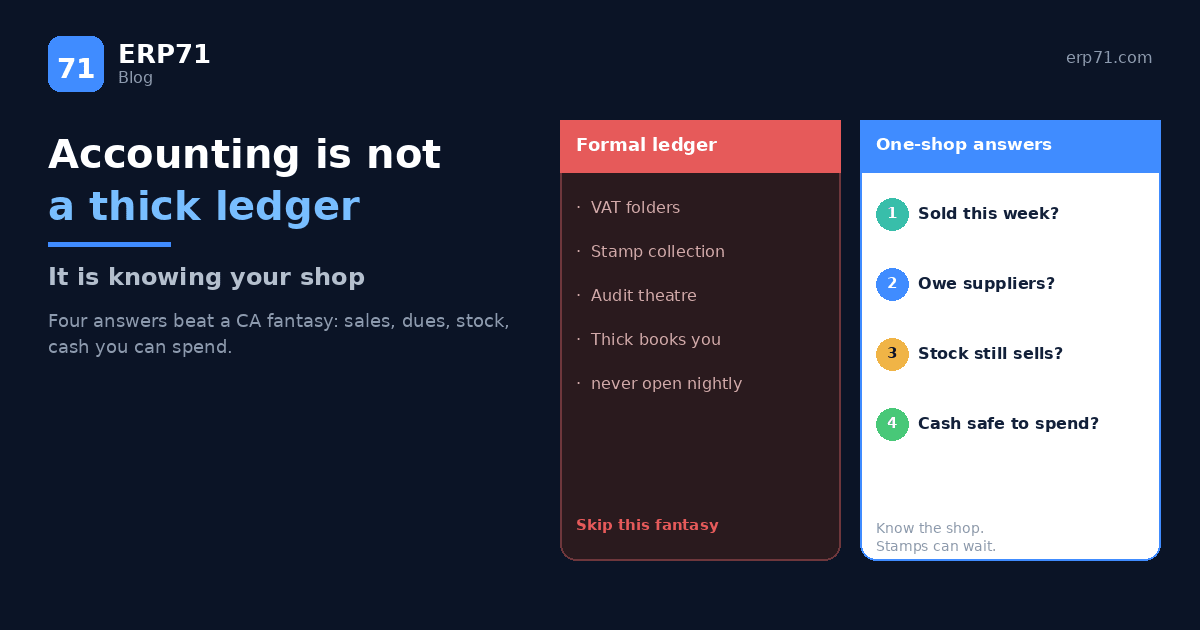
You hear the word accounting and picture someone in an office with stamps and thick books. So you skip it. The shop runs on memory, WhatsApp, and a till that “looks fine.”
Then a supplier calls for dues. Stock sits dead on the shelf. The drawer felt fat last night and the bank says no this morning (cash in drawer vs bank). You still cannot say, in one breath, whether the shop made money this week.
That gap is not a CA problem. It is a one-shop problem. Real accounting for one counter is not a career. It is knowing four numbers well enough that you stop guessing.
Four answers that beat a thick ledger
You do not need audit-perfect books to run a shop. You need answers you trust.
1. What did we sell this week?
Cash sales, bKash/Nagad, and credit sales in one daily total you write somewhere you will open again. Not three piles in three heads. Soft money trails already bite when wallets and till do not match (bKash / Nagad).
2. What do we owe suppliers, and when?
One weekly list with names and dates. Memory is a bad purchasing system (purchase orders). A short dues list is how you stop paying whoever shouts loudest.
3. What stock is still sellable?
Fast movers versus dead stock. Wrong buys lock cash on the shelf (stockouts and overstock). Knowing what will not move is as much accounting” as knowing what sold.
4. What cash is safe to spend?
Bank and cleared mobile money you can actually send, separate from till change. A full drawer is not a settlement account (cash in drawer vs bank).
If sales still float in a sheet (spreadsheets), these four answers usually float too. Month-end then becomes archaeology (simple month-end close).
Four habits that make “accounting” a daily habit
You do not need a ledger book you never open. You need a rhythm a busy owner can keep.
1. One daily sales total.
Cash + mobile wallets + due sales, written once at close. Three minutes. Same place every day.
2. One weekly supplier-dues glance.
Names, amounts, due dates. Update it when you buy and when you pay. Open it before you promise anyone new credit from the till.
3. One monthly rough profit.
Sales minus purchases and obvious costs (rent, salaries, utilities you know). It will not impress a tax auditor. It will tell you if the shop is shrinking while the till still feels busy.
4. Keep cash piles honest.
Drawer, bank, and mobile stay separate in your head and on paper. Mix them and “we have money” becomes fiction the week rent and restock land together.
Festival week makes every gap louder. More vans, more voice notes, more “pay him from the drawer.” The shops that survive it already have those four answers written somewhere dull and reliable.
What this is not
It is not telling a tiny shop to hire a full-time accountant on day one. It is not VAT theatre for a single counter. It is refusing to let “we feel okay” replace “we can answer those four questions tonight.”
If you are already weighing a second branch (second branch), blurry answers at shop one simply copy into shop two, with twice the surprise bills.
Soft close
When sales, stock, dues, and cash live in one place, accounting stops sounding like a CA’s job and starts sounding like how you close the day. Tools like ERP71 are built for that kind of one-shop clarity: the four answers in one habit, without a thick ledger you never open.
Know the shop. The stamp collection can wait.